
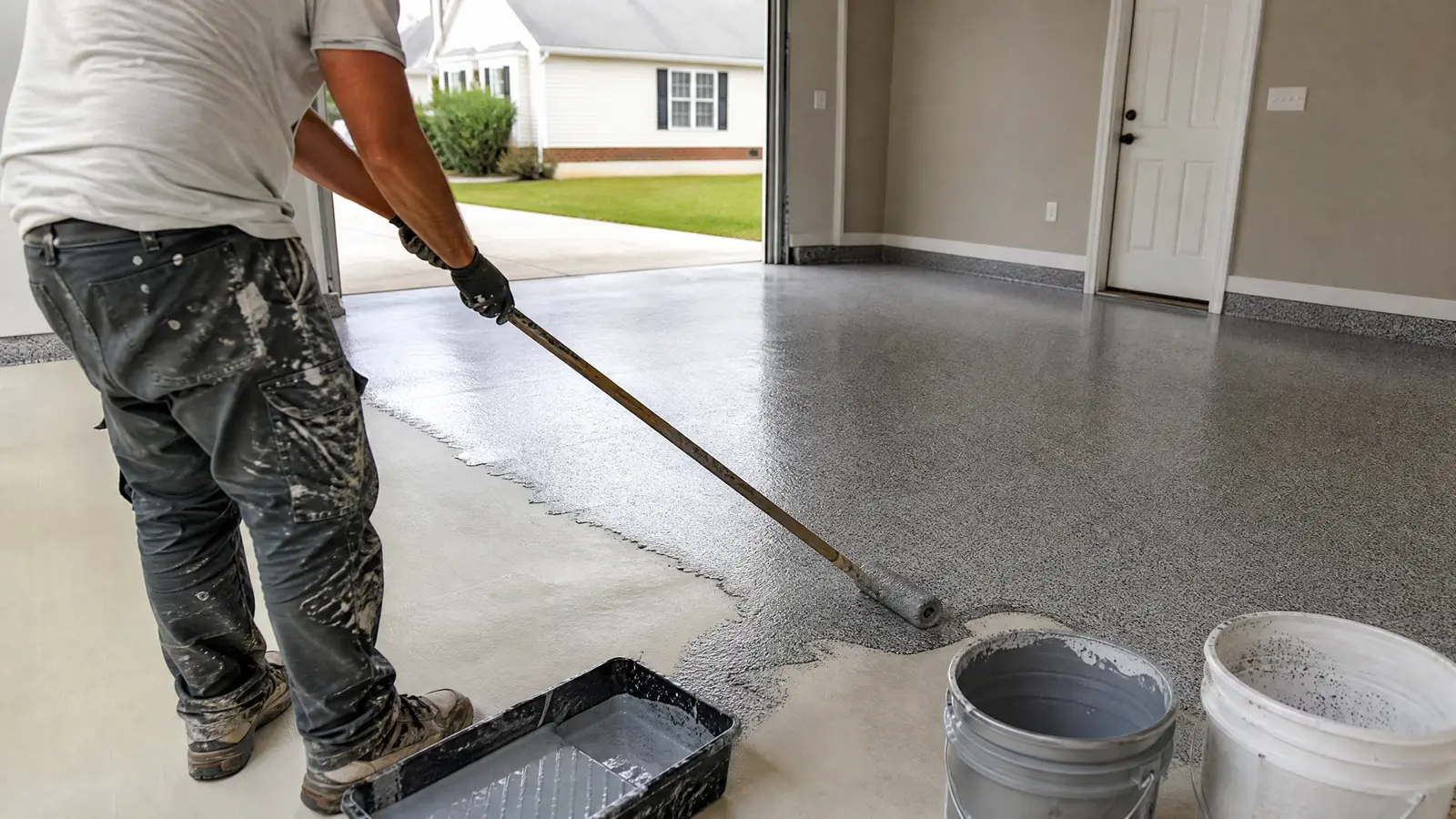
Epoxy Floor Installers Near Me: 10 Questions to Ask Before You Hire in South Carolina
Learn how to choose an epoxy floor contractor in South Carolina with 10 questions on licensing, prep, moisture and price, plus Epoxy Garage Floor Coating tips.
A new garage floor should look sharp for years, not start lifting after one hot summer. If you’re searching for epoxy floor installers near me, you’ll find plenty of names, and the quotes can look very different. The gap usually comes down to prep, materials and what’s actually written down. Sumter Epoxy Floors is a floor coating specialist based in Sumter County, and this guide lists the questions worth asking any contractor, us included, so you can compare quotes fairly.
Questions About Licensing, Insurance and Paperwork
1. Are you licensed, and can I verify it? Ask for the license details and look them up yourself. Rules differ by project type and size, so check with the South Carolina Department of Labor, Licensing and Regulation (LLR) rather than relying on anyone’s summary, including ours. For one example, South Carolina regulation 106-2 requires a licensed residential specialty contractor to hold a surety bond of at least $10,000 when a project costs more than $5,000 (South Carolina Code of Regulations ch. 106, current through Sept 2024). Confirm how that applies to your job with the state.
2. Can you show proof of liability insurance? A coating job involves grinders, solvents and heavy equipment moving around your home. Ask for a certificate of insurance, then call the insurer to confirm it’s current. This isn’t legal advice, just a sensible check.
3. Will I get a written quote? You should. It needs to list the square footage, the prep method, the products by name, the number of coats and what’s excluded. A one-line number on a text message isn’t enough to compare against.
Questions About Prep and Moisture
Most failed floors trace back to what happened before the coating went on. This is where good and bad quotes split apart.
4. How will you prep my concrete? Look for diamond grinding or a similar mechanical method that opens up the surface so the coating can grip. Acid etching and a quick scrub rarely do the same job. Prep costs money, and it shows up in quotes. Intermountain Coatings (July 2025) puts basic cleaning and etching at about $1 to $2 per square foot, diamond grinding for damaged concrete at about $2 to $4, and crack repair and patching at about $3 to $5. A quote that skips all three may be cutting the step that matters most.
5. Will you test my slab for moisture? Sumter’s summers are hot and humid, with average daily highs of 87.3°F in June, 90.2°F in July and 88.5°F in August (Wikipedia, Sumter, South Carolina), and slabs can hold moisture that pushes up under a coating. Ask which test they use and why. The ASTM F2170 in-situ relative humidity test places probes at about 40 percent of slab depth for slabs that dry from one side (Wikipedia, Epoxy moisture control system). The ASTM F1869 calcium chloride test only measures the top quarter inch of the slab, so it can miss deeper moisture (Construction Canada, accessed Oct 2026). Typical epoxy coatings call for slab humidity of 75 percent or lower, but the maker’s data sheet sets the real limit for each product (One Stop Epoxy, accessed Oct 2026).
6. What happens if the slab is too damp? A straight answer matters here. Polyaspartic coatings, for example, shouldn’t go on a slab with a high moisture vapor emission rate, because moisture can make the coating bubble and lift (Concrete Network, accessed Oct 2026). A trustworthy contractor will explain a moisture-control step or tell you to wait, not coat over the problem.
Questions About Products, Price and Follow-Up
7. Which product are you recommending, and why? Epoxy and polyaspartic each have strengths. Ask why one suits your garage, how it handles sun and hot tires, and what the maker’s data sheet says. Installers describe polyaspartic as lasting 15 to 25 years with care, but that’s a manufacturer and installer claim, not independent testing (Concrete Network, accessed Oct 2026). Treat any lifespan promise with the same caution. Our epoxy garage floor coating page covers the options in more detail.
8. Does the price make sense for my size of garage? Angi (updated Aug 3, 2026) lists typical epoxy prices of $750 to $3,000 for a one-car garage of about 250 sq ft and $1,500 to $6,000 for a two-car garage of about 500 sq ft. Professional installation runs $7 to $9 per square foot, against $1.08 to $2.66 for DIY kits (ArmorGarage, 2026). A quote far below these ranges deserves a question about what’s been left out.
9. What does the finished job include? Ask about cleanup, cure time before you can drive on the floor, and any slip-resistant additive for wet conditions. Get these details in writing.
10. If something goes wrong, who comes back? Ask what any warranty actually covers and for how long, and read it before you sign. A contractor based nearby can return for a fix without a long drive. We work across Sumter, Shaw AFB-area neighborhoods, Dalzell, Mayesville, Pinewood and Manning, along US 15, US 76/378 and SC 441.
Key Takeaways
- Get a written quote that names the prep method, products and coats.
- Verify licensing and insurance with the state and the insurer.
- Ask about moisture testing, since humid summers make it a real concern.
- Compare prices against sourced ranges, and ask why any quote falls far outside them.
- Read the warranty wording before you sign.
Ready to Compare a Written Quote?
We’ll visit your garage, walk through the prep step by step and put the price in writing. Get a Free Estimate through our epoxy garage floor coating page, or call (839) 600-9293.
Frequently Asked Questions
Two or three is plenty. Ask each contractor the same questions and compare the written details, not just the totals. Differences in prep method, product and number of coats often explain a price gap better than the bottom-line figure.
Not automatically, but it deserves questions. Professional installation typically runs $7 to $9 per square foot (ArmorGarage, 2026). If a quote falls well below that, ask whether it includes grinding, crack repair and moisture testing.
DIY kits cost less up front, about $2 to $5 per square foot in materials (Intermountain Coatings, July 2025). The tradeoff is prep: renting a grinder and judging slab moisture are the parts most likely to go wrong without experience.
Ready for a floor that lasts?
Tell us about your garage, patio or shop floor. We reply with a written estimate and explain exactly how the concrete will be prepared.